
Start with direction, not a fixed number of images
You do not need a finished layout before the consultation. Bring the main theme, a few essential subjects and examples of the atmosphere you prefer. The artist can help decide what should be dominant and which elements can work as background or transitions.
First decide whether the sleeve should read as one continuous story or as a collection of separate tattoos connected by style. Both can work, but the planning is different.
The composition must work around the whole arm
A sleeve is seen from several angles and while the arm moves. The outer arm, inner arm, elbow and forearm have different shapes and visibility. Main elements need enough space, while lines and shadows should guide the eye around the limb.
A rectangular reference image cannot simply be placed on the arm. It must be adapted to anatomy, with intentional areas for transitions, negative space and contrast.
Plan the map even if you build the sleeve in stages
An overall map reserves room for important subjects and prevents awkward gaps later. It does not mean every detail must be finalized before session one. If you already have tattoos on the arm, send clear photos from several angles so the artist can assess how they might be integrated, extended or covered.
Build the schedule around real availability
The number of sessions depends on area, detail, technique and individual progress. A sleeve may be divided by major subjects or by sections of the arm. Each completed area needs time to settle before the next stage, following the aftercare instructions provided by the studio.
If you are stationed in Poland, compare the project plan with duty, field time, leave, travel and a possible PCS. Do not place a demanding appointment immediately before a period when you cannot reasonably protect the tattoo or attend a follow-up. If your schedule is uncertain, tell the studio early and avoid booking every stage too tightly.
What if you may move before the sleeve is finished?
Ask the artist to structure the project so each major stage looks intentional. Keep your reference files and follow-up photos organized. If another artist may eventually continue the work, be transparent with both artists; not every style or unfinished composition is easy to transfer.
Planning for uncertainty is better than rushing the final sessions. For shorter travel-related timing, read getting tattooed before PCS, leave or travel.
Budgeting for a multi-session piece
A complete sleeve cannot be priced reliably from one inspiration photo. The artist first needs the scope, style and likely session structure. Be clear about your budget and ask what can be completed as a coherent stage rather than shrinking a detailed idea until it no longer works.
See our Boleslawiec tattoo quote guide for the information that helps with pricing.
Consultation checklist
- the main theme and must-have subjects,
- a small set of style references,
- photos of the full arm and existing tattoos,
- the area the sleeve should cover,
- your realistic availability, leave and move window.
This guide is general planning information. It is not medical or command-policy advice, and Zajawa Tattoo Boleslawiec is not affiliated with the U.S. Army, NATO or any government institution.
Describe the theme, attach photos of the arm and share your realistic timeline. We will start with the project scope and consultation.
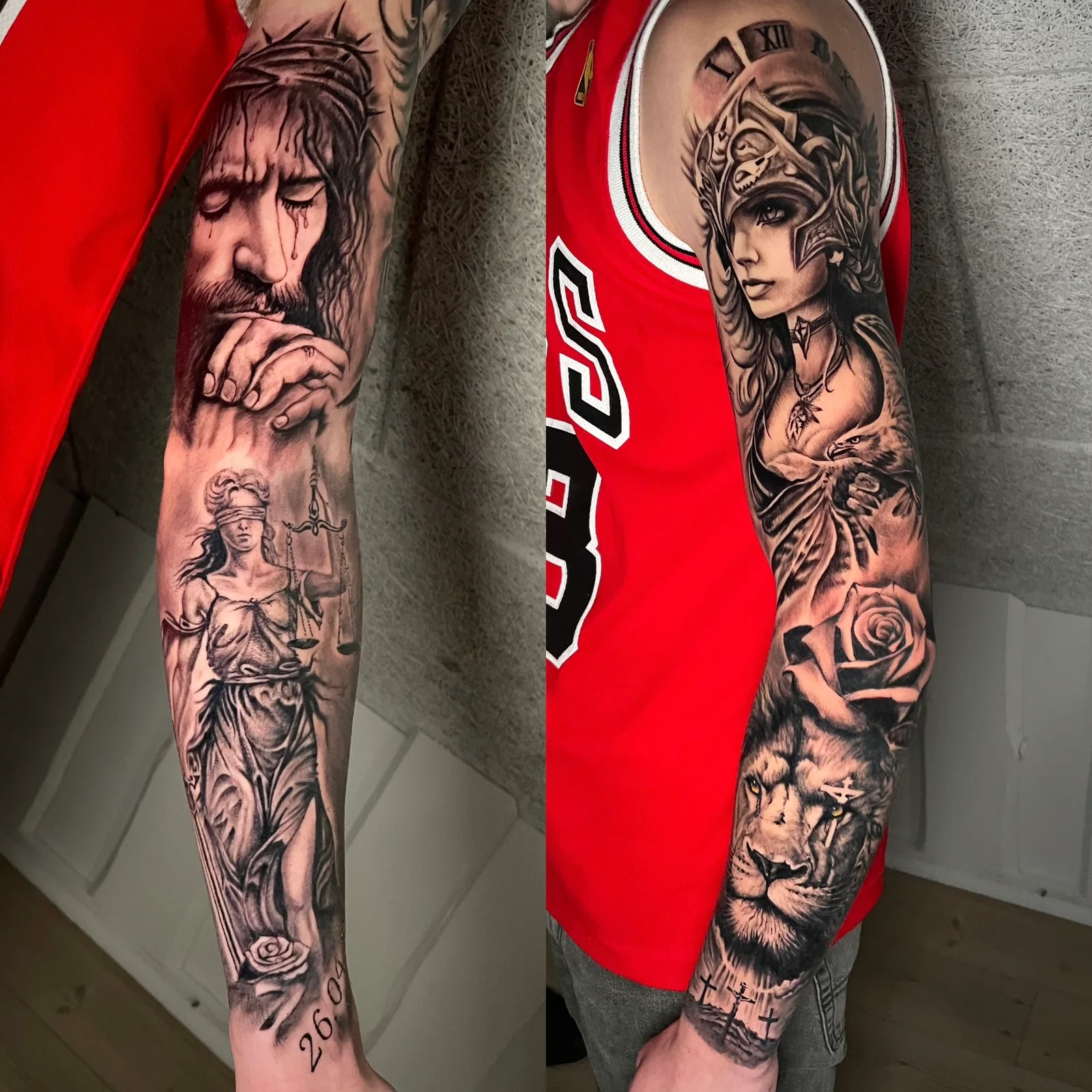
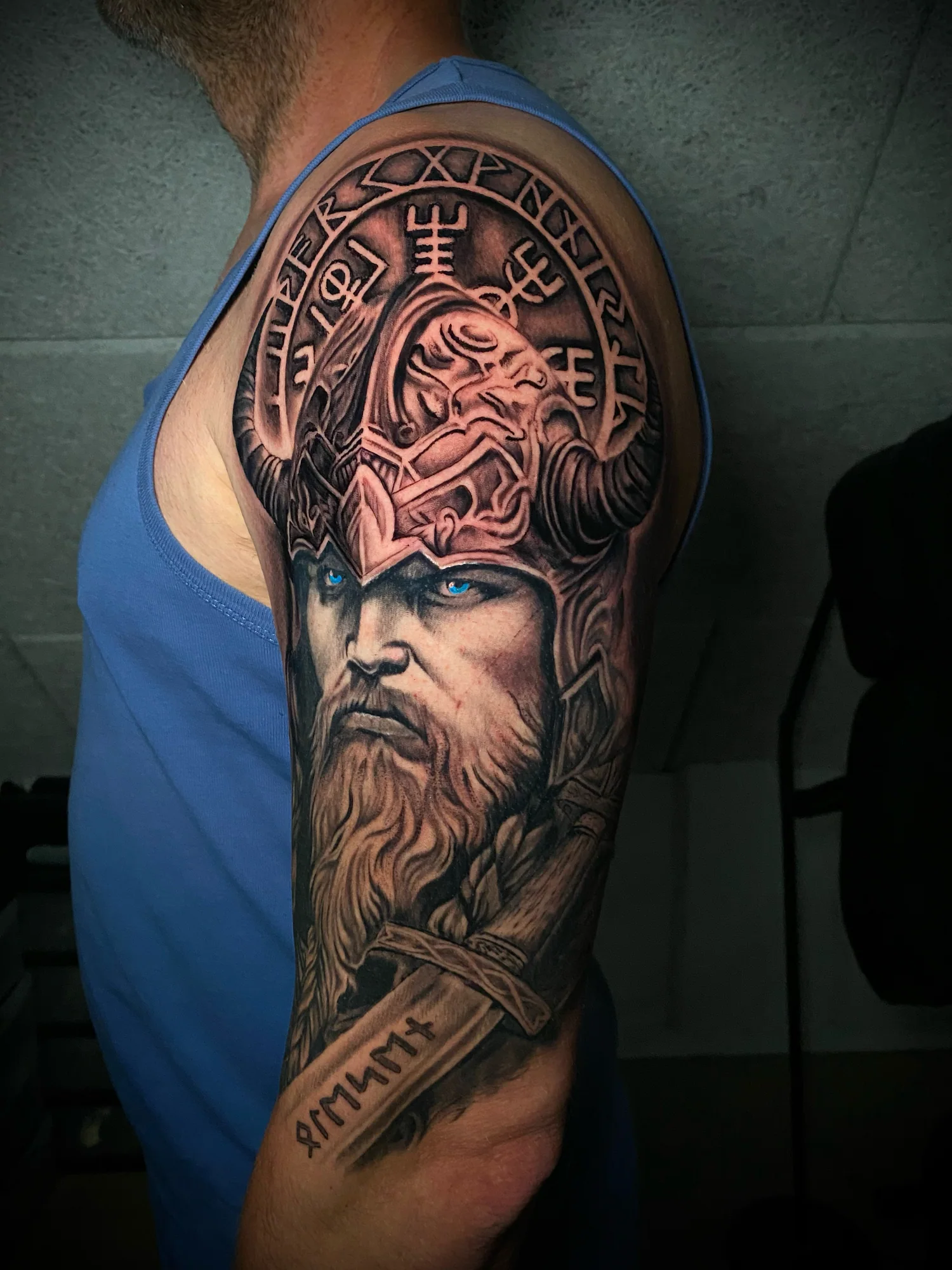
Plan your sleeve →Examples from Ego’s portfolio
Frequently asked questions
Should I plan the whole sleeve first?
Agree on the overall composition and space for the main subjects before adding individual pieces.
What should I send for a sleeve consultation?
Send views of your whole arm, existing tattoos, references and a list of the main subjects.
Can I get a fixed session count from one reference?
A reference alone does not define the full scope. Discuss placement, background and detail with Ego first.
Send the subject, placement, size and references, or choose a free 30-minute consultation at the studio.